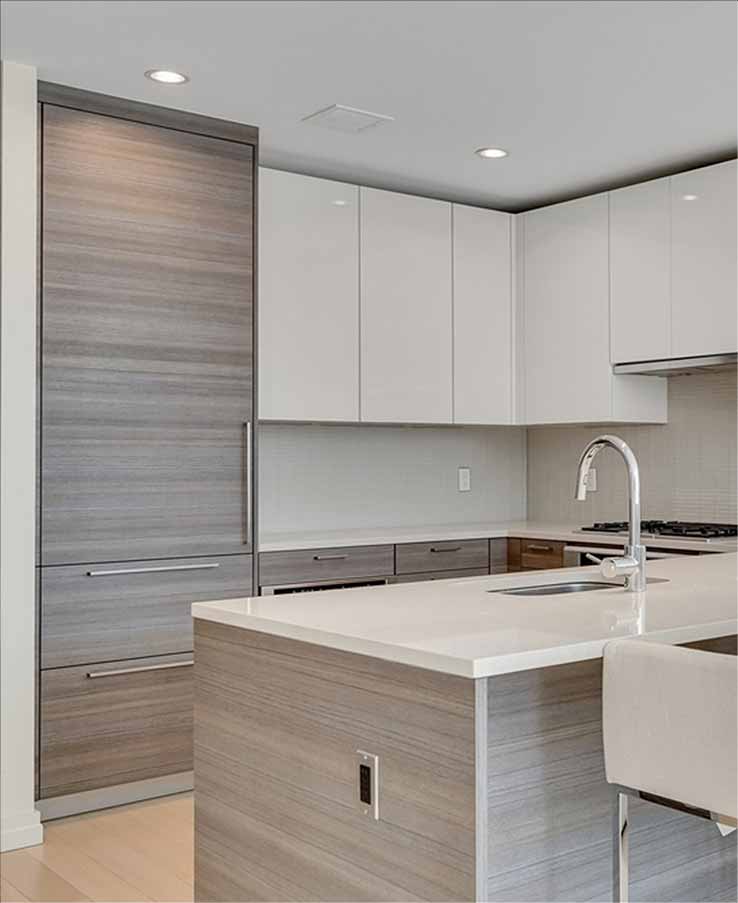




The home you purchase can change over time. The neighborhood around it becomes part of your everyday life from the moment you move in.
Buying a home is one of the biggest financial decisions most people will ever make. It’s also one of the most emotional. It’s easy to become captivated by a beautifully renovated kitchen, a spacious primary suite, or an inviting backyard. Those features certainly matter, but they’re only part of the equation.
Buying the right neighborhood in Boston is just as important as buying the right home. After all, you can repaint walls, remodel a kitchen, or finish a basement. You can’t move the coffee shop around the corner, shorten your commute, or create a stronger sense of community once you’ve moved in.
This is especially true throughout Greater Boston, where neighborhoods can vary dramatically despite being only a few miles apart. A buyer searching in Jamaica Plain will experience something very different from someone purchasing in Back Bay, Newton, Somerville, or Quincy. Each community has its own personality, pace, amenities, and long-term opportunities.
That’s why experienced real estate professionals often encourage buyers to “buy the neighborhood first.” The home itself should support your lifestyle, but the neighborhood is what shapes your daily experience for years to come.
In this guide, we’ll explore how to evaluate a neighborhood like a local, what factors matter most, and why taking a little extra time before making an offer can help you make a more confident decision.
Why the Neighborhood Matters More Than the House
Real estate professionals often repeat the phrase, “location, location, location,” and while it may sound cliché, there’s a reason it has endured for decades. A home’s location influences everything from your morning routine to your long-term property value.
Think about how much time you actually spend interacting with your neighborhood. It’s where you’ll take evening walks, grab your morning coffee, meet friends for dinner, and perhaps even raise a family. It’s where your children might attend school, where you’ll shop for groceries, and where you’ll spend weekends exploring parks, restaurants, and local businesses.
The neighborhood also plays an important role in protecting your investment. While market conditions fluctuate, desirable communities with strong amenities, convenient transportation, and active local economies have historically remained attractive to buyers over the long term.
That’s why choosing a neighborhood shouldn’t happen after you’ve fallen in love with a particular house. Instead, it should become part of your home search from the very beginning.
🌳 Red Tree Take
One of the most common things we hear from past clients isn’t, “I wish the kitchen had different countertops.” It’s, “We’re so glad we chose this neighborhood.”
The house becomes home because of the community around it.
Experience the Neighborhood Like a Local
One afternoon showing rarely tells the full story.
A neighborhood that feels peaceful on a Tuesday afternoon may become much busier during the morning commute. Likewise, an area that seems quiet during the day may come alive with restaurants, nightlife, or community events after sunset.
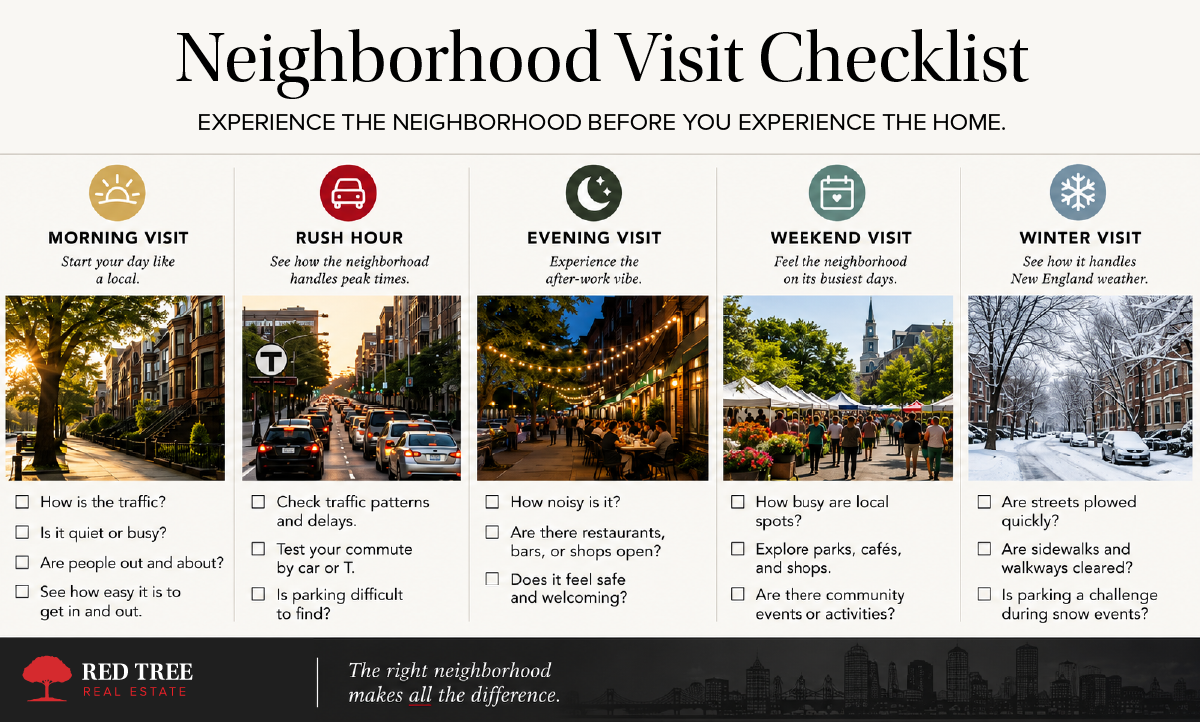
That’s why we encourage buyers to spend time in neighborhoods before seriously considering a purchase. Visit on a weekday morning, return during rush hour, and stop by on a Saturday afternoon. If you’re considering a condominium in the city, take a walk around after work and pay attention to how residents use the space. Are people walking dogs? Sitting in neighborhood parks? Meeting friends at outdoor cafés? These everyday moments often reveal more about a community than an online listing ever could.
As you explore, pay attention to details that aren’t listed on a property sheet. Listen for traffic noise. Observe how busy nearby intersections become. Notice whether sidewalks feel inviting for walking or whether most errands require getting in the car. The goal isn’t to find a perfect neighborhood. It’s to discover one that feels like a place where you’ll enjoy spending your everyday life. Explore homes for sale throughout Greater Boston.

Think About Your Everyday Lifestyle
When buyers imagine living in a new home, they often picture holidays, dinner parties, or relaxing weekends. While those moments are important, they’re only a small part of everyday life. Most of your time will be spent doing ordinary things. Picking up groceries after work. Stopping for coffee before your commute. Walking the dog after dinner. Going to the gym. Meeting friends for lunch. Running errands on a Sunday afternoon.
These routines quickly become the rhythm of daily life, which is why convenience often matters more than buyers initially realize.
Spend time exploring nearby businesses. Visit the grocery store you’d likely shop at each week. Grab coffee from a neighborhood café. Walk through the nearest park or recreation area. Explore local restaurants, not because you’ll eat out every night, but because thriving local businesses often reflect a vibrant community.
This idea was one of the strongest points in the original article written by our agent, and it’s worth emphasizing. Looking beyond the house itself and evaluating the businesses, services, and amenities you’ll actually use can make a significant difference in your long-term satisfaction with a neighborhood.
Communities that support your lifestyle often become places where you naturally spend more time outdoors, get to know your neighbors, and feel more connected.
🌳 Red Tree Take
Don’t ask yourself whether you love the house. Ask yourself whether you’ll enjoy living around the house.
That subtle shift in perspective often changes how buyers evaluate a property.
Test Your Commute Before You Commit
What looks like a twenty-minute commute on Google Maps can feel very different on a rainy Tuesday morning. For many buyers, commuting remains one of the largest contributors to everyday stress. Even those who work remotely often travel regularly for meetings, school drop-offs, shopping, or social activities.
Before making an offer, try experiencing your commute the way you would after moving in. Drive the route during rush hour. Ride the MBTA if public transportation is important to you. Walk from the nearest transit stop to the home. Pay attention to parking availability, traffic bottlenecks, and overall travel time.
Greater Boston offers one of the country’s most extensive public transportation systems, but accessibility can vary significantly from one neighborhood to another. A home located within walking distance of an MBTA station may offer more flexibility than one requiring multiple transfers or lengthy drives.
Remember that your commute isn’t simply about time. It’s also about quality of life. Saving even fifteen minutes each way adds up to more than one hundred hours over the course of a year.
Explore the Local Community
Every neighborhood has its own personality. Some are defined by bustling commercial districts filled with restaurants and cafés, while others are known for quiet residential streets, expansive parks, or strong community traditions. Finding the right fit isn’t about choosing the “best” neighborhood. It’s about choosing the one that best complements the way you live.
As you explore potential areas, spend some time doing more than simply driving past the homes. Walk through the local business district. Browse an independent bookstore. Visit a neighborhood coffee shop during the morning rush. Sit in a nearby park for fifteen minutes and simply observe. You’ll often learn more from these experiences than you will from demographic reports or online reviews.
Boston’s neighborhoods each offer something unique. Beacon Hill charms residents with its historic streets and walkability, while Jamaica Plain is known for its green spaces and vibrant local businesses. South Boston has evolved into one of the city’s most active neighborhoods for young professionals, while communities like Newton, Brookline, and Arlington continue to attract buyers looking for excellent schools, established neighborhoods, and suburban conveniences with close proximity to Boston.
Even if you don’t frequently dine out or spend weekends shopping locally, thriving small businesses often indicate a healthy, engaged community. Farmers markets, neighborhood events, public libraries, playgrounds, and recreation centers all contribute to the overall quality of life. Community isn’t something you notice during closing. It’s something you experience every day after you move in. Meet our local and experienced agents.
🌳 Red Tree Take
One of our favorite questions to ask buyers is:
“Where would you spend a Saturday morning if you lived here?”
If the answer comes naturally, you’re probably paying attention to the neighborhood, not just the house.
Think Beyond Today’s Market
It’s easy to evaluate a neighborhood based on what it looks like today, but buying a home is often a long-term investment. Thinking ahead can help you better understand how a community may evolve over the next five, ten, or even twenty years.
Researching future development doesn’t require specialized knowledge. Most municipalities publish planning documents, zoning updates, and proposed development projects online. New transit improvements, mixed-use developments, school renovations, and infrastructure investments can all influence how a neighborhood grows over time.
That doesn’t necessarily mean every planned project will increase home values, nor does every change represent a negative. The important thing is understanding what’s happening around the property you’re considering.
Likewise, pay attention to the condition of surrounding homes. Are neighboring properties generally well maintained? Are homeowners investing in renovations? Do you notice new businesses opening nearby? These observations can provide clues about the overall health and momentum of a neighborhood.
Looking ahead also means considering your own future. A neighborhood that works well for you today should ideally continue supporting your lifestyle several years from now. Even if you don’t currently have children, nearby schools may influence future resale value. Likewise, someone who works remotely today may eventually return to an office and appreciate easier transportation options.
Buying a home isn’t just about solving today’s housing needs. It’s about choosing a place that can continue serving you as life changes. Discover what your budget can buy.
Why Every Season Tells a Different Story
One of the best pieces of advice from our original reference article is especially relevant for buyers in New England: don’t overlook what a neighborhood looks like during the winter months. Snowstorms reveal things that are impossible to notice during the summer. Streets that appear wide and spacious in July may become significantly narrower once snowbanks accumulate. Sidewalk maintenance can vary from one neighborhood to another, and on-street parking may become more challenging after major storms.
If you’re purchasing a condominium, ask about snow removal responsibilities. If you’re buying a single-family home, consider how steep the driveway is and whether sidewalks are maintained by the city or the homeowner.
Winter isn’t the only season worth considering.
Spring may reveal drainage issues or standing water after heavy rain. Summer provides insight into tree coverage, neighborhood activity, and outdoor recreation. Fall offers a chance to observe traffic patterns around local schools and appreciate the character that mature landscaping brings to an area. Every season tells a different story about how a neighborhood functions. The more chapters you experience before buying, the fewer surprises you’ll encounter after moving in.
Ask Questions That Listings Can’t Answer
Online listings do an excellent job describing a property’s features, but they rarely answer the questions that influence daily life. As you visit homes and neighborhoods, don’t hesitate to ask your real estate professional about the community itself. Local agents often have insights that don’t appear in listing descriptions or online searches.
For example, you might ask whether the neighborhood hosts annual events, whether parking becomes difficult during certain times of year, or whether new developments have been proposed nearby. Understanding how residents actually experience the community can provide valuable context that extends far beyond square footage and finishes. It’s also worth asking yourself a few questions.
Can you picture yourself walking these streets after dinner?
Would you enjoy spending weekends nearby?
Does the pace of the neighborhood feel energizing or relaxing?
Can you imagine yourself still being happy here five years from now?
These aren’t questions that produce right or wrong answers. They’re questions that help you determine whether a neighborhood feels like home. Attend our next homebuyer workshop to learn more about buying your first home.
🌳 Red Tree Take
The best homes don’t simply check every box. They fit naturally into the life you’re trying to build. Sometimes that means choosing a slightly smaller home in the perfect neighborhood instead of the biggest house in the wrong location.
Conclusion
Buying a home is about much more than bedrooms, bathrooms, and beautiful finishes. It’s about choosing the place where you’ll build routines, celebrate milestones, meet neighbors, and create memories for years to come.
Taking the time to explore neighborhoods before making an offer can help you avoid buyer’s remorse and make a more informed decision. Visit at different times of day, imagine your daily routine, explore local businesses, test your commute, and think about how the community may change over time.
The perfect home isn’t always the one with the newest kitchen or the largest backyard. More often, it’s the one that’s located in a neighborhood where you’ll genuinely enjoy living.
Ready to start your home search? Contact Red Tree Real Estate to connect with one of our local experts and discover which Greater Boston neighborhood feels like home.

Additional Articles & Posts
The 2026 Boston First-Time Homebuyer Guide: Programs, Down Payments & What You Actually Need to Save

Boston first-time homebuyer guide for 2026: learn down payment options, assistance programs, closing costs, and how much cash you need to buy.

Buying a home in Greater Boston? Learn how to buy the right neighborhood by evaluating commute, lifestyle, amenities, and long-term value before making an offer.

Preparing to sell your home in Boston? Learn the expert tips that can help your home stand out, attract more buyers, and maximize your sale price in today's competitive market.
See what your home is worth
Enter your home address to receive a free market analysis and
home valuation from us.
Need help? Call our office at 617.944.5311