



The listing price tells you what the home costs. The monthly payment tells you whether it fits your life.
If you’ve been asking how much house can I afford in Boston, scrolling through listings may actually be starting the process backward.
A $500,000 home, a $750,000 condo and a $1 million property all sound like straightforward price points. But once mortgage rates, down payments, property taxes, condo fees and insurance enter the picture, the difference between what you’re approved to buy and what you’re comfortable owning can become substantial.
For this guide, we’re modeling a 30-year fixed mortgage at exactly 7%.
That doesn’t mean we’re claiming every Boston buyer can get a 7% mortgage today. Actual rates vary by borrower, loan type, down payment, credit, points and lender.
Massachusetts-based lenders such as Radius Financial Group emphasize that mortgage programs, rates and terms can change, while Leader Bank encourages buyers to obtain a customized mortgage quote and get pre-approved early so they understand what they can actually afford.
So rather than trying to predict tomorrow’s rate, we’re using 7% as a simple question:
If your mortgage rate were 7%, what would buying in Boston actually look like?
And more importantly, what would that budget buy?
Key Takeaways
At 7% with 20% down, the principal-and-interest payment on a $500,000 home is about $2,661 per month. At $750,000, it’s approximately $3,992. At $1 million, it’s approximately $5,322.
But those are not complete housing payments. Boston property taxes, homeowners insurance, condo fees, maintenance and potentially mortgage insurance need to be layered onto that number.
Meanwhile, Boston’s market is giving buyers something they haven’t always had in abundance: more time and more inventory. September active listings were up 16.1% from a year earlier, the median list price was approximately $785,000, and homes were taking longer to sell. Realtor
That doesn’t suddenly make Boston cheap. It does make understanding your actual buying power more useful than ever.
Why 7% Changes How Much House You Can Afford in Boston
Mortgage rates don’t change the countertops, bedroom count, or neighborhood.
They change the cost of borrowing the money that gets you through the front door.
Consider a $750,000 home.
With 20% down, you’re financing $600,000.
At exactly 7% over 30 years, that produces a principal-and-interest payment of approximately:
$3,992 per month in principal and interest.
At 5%, the same $600,000 mortgage would produce a very different monthly payment.
That’s why buyers who formed their idea of affordability when mortgage rates were unusually low can experience a nasty bit of financial whiplash when they begin shopping today.
The house hasn’t necessarily become dramatically different. The financing has.
This is also why asking a lender, “What’s the maximum I can qualify for?” should not be the end of the conversation. The better question is:
“What monthly payment can I comfortably live with?”
Then work backwards. Leader Bank makes essentially the same point through its homebuyer resources. It recommends getting pre-approved early so buyers understand their loan options, expected budget, and ability to make an offer before finding a property they love.
How We’re Calculating the Payments
For every scenario below, we’re using the same assumptions:
- 30-year fixed mortgage
- 7.00% illustrative interest rate
- 20% down payment
The 7% figure is a planning assumption, NOT an advertised rate from Red Tree, Radius Financial Group, or Leader Bank. That’s an important distinction.
Radius notes that its loan programs, rates, terms, and conditions may change and that financing remains subject to factors including income verification, credit approval, and appraisal. Leader Bank similarly offers personalized mortgage quotes rather than presenting one rate as universally applicable to every borrower.
Your actual mortgage might be above or below 7%. But using one constant rate lets us answer a much more interesting question:
How does purchase price translate into monthly cost?
What Does a $500,000 Boston Home Cost at 7%?
Let’s start at $500,000. With 20% down:
Purchase Price: $500,000
Down Payment: $100,000
Mortgage: $400,000
Term: 30 years
Illustrative Rate: 7%
Principal + Interest
Approximately $2,661 per month
That’s about $31,934 per year in principal and interest. But the mortgage is only the skeleton of the payment. Taxes, homeowners insurance, and potentially condo fees still need to be attached.
For a qualifying primary residence in Boston, the property-tax calculation can also be more nuanced than simply multiplying the purchase price by a percentage.
Boston’s FY2026 residential tax rate was $12.40 per $1,000 of assessed value, and the City offers a residential exemption to qualifying owner-occupants. Taxes are calculated from assessed value, not automatically from what you paid for the property. Boston.gov
So don’t automatically plug $500,000 into a generic online tax calculator and call it finished.
Look at the actual property.
What Can Around $500K Buy in Boston?
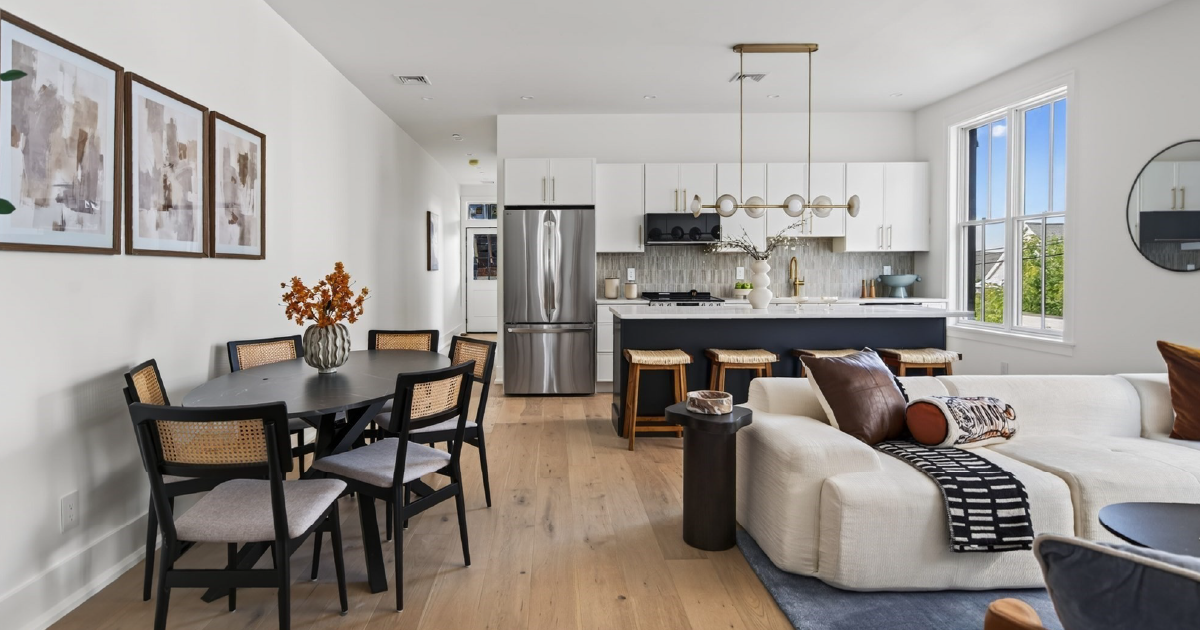
Example 1 | 4471 Washington Street Unit 1, Roslindale
List Price: $499,000
1 BD | 1 BA | 860 Sq.Ft. | 1 Parking Space
→ HOA fee: $350/month
The current listing describes an open layout, central air, in-unit laundry, private patio space, and parking. The condo fee includes items such as water, sewer, building insurance, grounds maintenance, and snow removal. See the listing here.
$499,000 with 20% down and our illustrative 7% rate:
Down Payment: $99,800
Mortgage: $399,200
Principal + Interest
→ Approximately $2,656/month
Now add the $350 association fee. Before property taxes and homeowners insurance, you’re already around:
→ $3,006/month in principal and interest.
That’s why the listing price alone is a terrible narrator. It leaves out half the story. A buyer comparing this property with a $525,000 condo carrying a $150 monthly fee might discover that the more expensive listing produces a surprisingly similar monthly housing cost.
What This Budget Tells Us
Around $500,000 in Boston, buyers are frequently looking at condos rather than detached single-family homes, and location becomes one of the biggest levers in the search.
You may find more interior space in Roslindale, Dorchester, or Hyde Park than the same budget would purchase in downtown neighborhoods.
The tradeoffs aren’t inherently good or bad. They’re simply different versions of Boston homeownership.
What Does a $750,000 Boston Home Cost at 7%?
Now let’s move much closer to Boston’s current median asking price. Boston’s September median list price was approximately $784,778, so $750,000 is not an abstract luxury scenario. It sits squarely inside today’s mainstream market. Realtor
At $750,000 with 20% down:
Purchase Price: $750,000
Down Payment: $150,000
Mortgage: $600,000
Principal + Interest
→ Approximately $3,992/month
That’s roughly $47,902 per year before taxes, insurance or association costs. The jump from $500K to $750K increases principal and interest by approximately:
→ $1,331 per month in principal and interest.
That number is more useful than saying the house costs “$250,000 more.” Mortgages turn giant purchase prices into monthly decisions.
What Can Around $750K Buy in Boston?

Example 2 | 881 East 1st Street Unit 203, South Boston
List Price: $749,000
1 BD | 1 BA | 1,053 Sq.Ft. + 1 parking space
→ HOA fee: $492/month
This current South Boston listing is a loft-style condo with exposed beams, original hardwood floors, high ceilings, central air, in-unit laundry, and parking. It sits near East First Street, Castle Island, the Seaport, and major commuting routes. See the listing here.
At $749,000 with 20% down:
Down Payment: $149,800
Mortgage: $599,200
Principal + Interest
→ Approximately $3,986/month
Add the listed $492 condo fee, and you’re at roughly:
→ $4,478/month in principal and interest.
Before property taxes and homeowners insurance, and notice what happened.
We’ve gone from a newer one-bedroom in Roslindale at $499K to a substantially more expensive one-bedroom in South Boston. The additional $250,000 didn’t necessarily purchase additional bedrooms.
It purchased a different combination of location, character, square footage, proximity, and lifestyle.
Want to see what that budget looks like in more detail? Explore our guide to What $750K Gets You in Boston Today.
What Does a $1 Million Boston Home Cost at 7%?
At $1,000,000 with 20% down:
Purchase Price: $1,000,000
Down Payment: $200,000
Mortgage: $800,000
Principal + Interest
→ Approximately $5,322/month
That’s roughly:
→ $63,869 per year
before taxes, insurance, maintenance, or association fees. The move from $750K to $1M adds approximately another:
$1,331/month in principal and interest.
And compared with the $500K example, the P&I payment has effectively doubled. That symmetry isn’t magic. We’re using the same down-payment percentage, interest rate, and term.
Twice the financed amount produces roughly twice the payment.
What Can Around $1 Million Buy in Boston?
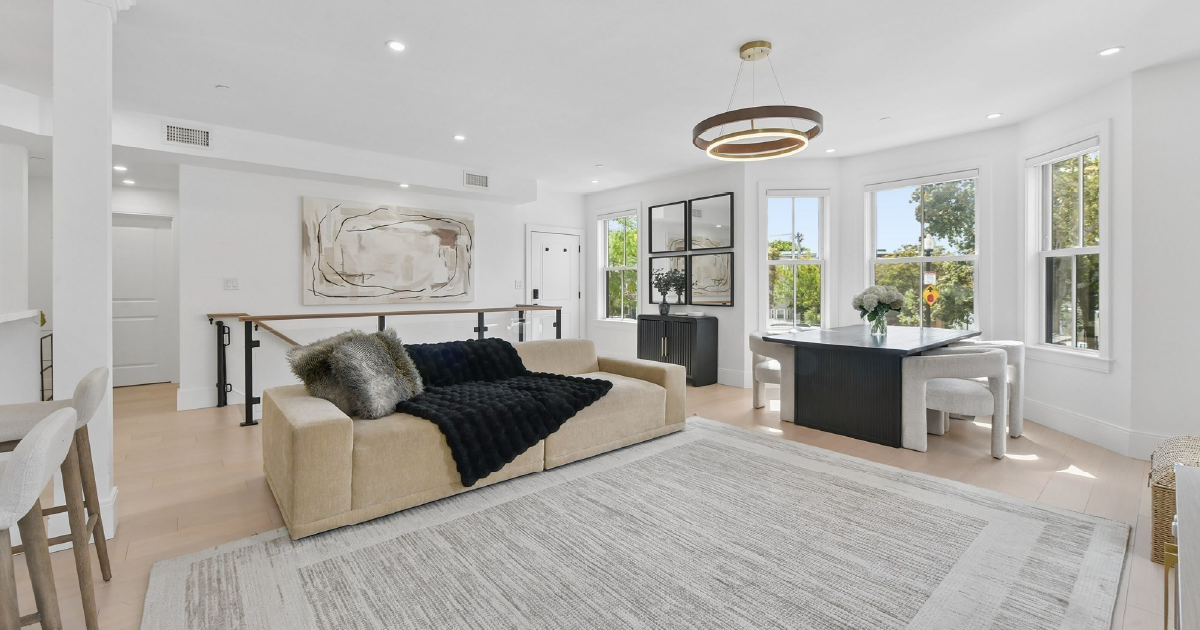
Example: 100 White Street Unit 1, East Boston
List Price: $995,000
3 BD | 3 BA | 1,757 Sq.Ft. | 1-car garage
HOA fee: $466/month
This East Boston condo is a multi-level property completed in 2024 with three bedrooms, three bathrooms, garage parking and significant living space. The listing describes an open floor plan, a large kitchen, primary suite and flexible lower-level space. See the listing here.
At $995,000 with 20% down:
Down Payment: $199,000
Mortgage: $796,000
Principal + Interest
→ Approximately $5,296/month
Add the $466 monthly HOA fee:
→ $5,762/month in principal and interest.
Before property taxes and homeowners insurance. Now compare this with the $749,000 South Boston example.
An additional roughly $246,000 in purchase price is buying significantly more space, two additional bedrooms, additional bathrooms, and garage parking, but in a different neighborhood.
At the same time, around $1 million in the South End, Back Bay, or parts of South Boston might buy a noticeably smaller property.
This is why Boston buyers shouldn’t ask only: “What can $1 million buy?”
They should ask: “What can $1 million buy where I actually want to live?”
The answer changes block by block.
$500K vs. $750K vs. $1M at 7%
Here is the clean comparison:
| Purchase Price | 20% Down | Mortgage | Monthly P&I at 7% |
| $500,000 | $100,000 | $400,000 | $2,661/month |
| $750,000 | $150,000 | $600,000 | $3,992/month |
| $1,000,000 | $200,000 | $800,000 | $5,322/month |
Illustrative calculations only. Assumes a 30-year fixed mortgage at exactly 7%. Taxes, insurance, HOA fees, mortgage insurance and other ownership costs are not included.
🌳 Red Tree Take
Don’t shop by approval amount. Shop by comfortable payment.
There’s a subtle but important difference between:
“The bank will lend me enough to buy this.” and “I’m comfortable spending this every month.”
Your lender is evaluating whether you qualify for the loan. You’re evaluating whether that loan fits your life.
Maybe you travel frequently.
Maybe you’re aggressively saving for retirement.
Maybe you’re planning for childcare, a wedding or graduate school.
Maybe you simply prefer having breathing room in your budget.
Those priorities do not appear on the listing sheet. The largest mortgage you qualify for is not automatically the best mortgage for you.
The Mortgage Isn’t Your Whole Housing Payment
Online mortgage calculators often produce a wonderfully clean number. Homeownership arrives with accessories.
Property Taxes
Boston’s residential property tax is based on the property’s assessed value.
For FY2026, the City used a residential rate of $12.40 per $1,000 of assessed value. Boston also provides a residential exemption to qualifying homeowners who occupy the property as their principal residence. Boston.gov
Because assessments, exemptions, and timing vary, use the actual property’s tax information rather than estimating solely from the asking price.
Condo Fees
This can reshape a Boston buyer’s budget dramatically. Our three listing examples alone show monthly association fees of approximately:
$350
$492
$466
That means a buyer choosing between two similarly priced condos could easily see several hundred dollars of monthly difference before touching the mortgage. But don’t evaluate the fee by size alone.
Ask what it covers.
Water? Heat? Building insurance? Snow removal? Elevator maintenance? Parking? Concierge? Reserves?
A $600 condo fee that covers significant expenses isn’t directly comparable with a $300 fee that covers almost nothing.
Insurance
Condo owners typically need their own unit policy in addition to the association’s master coverage.
Single-family owners generally carry broader homeowners coverage. Either way, it belongs in your monthly estimate.
Maintenance
No condo fee? Excellent.
Unfortunately, roofs have not yet agreed to work for free. Single-family owners should budget for repairs, systems, landscaping, snow removal and eventual replacements.
Boston’s older housing stock gives the city extraordinary character.
It occasionally gives plumbers extraordinary job security too.
What Happens If You Put Less Than 20% Down?
Twenty percent makes our examples simple. It isn’t universally required.
Leader Bank, for example, offers first-time buyer options including MassHousing, FHA and other low-down-payment programs, while Radius offers options including FHA, HomeReady and Home Possible for eligible borrowers.
So let’s revisit our $750,000 example. At exactly 7%:
20% Down
Down payment: $150,000
Loan: $600,000
P&I: Approximately $3,992/month
10% Down
Down payment: $75,000
Loan: $675,000
P&I: Approximately $4,491/month
5% Down
Down payment: $37,500
Loan: $712,500
P&I: Approximately $4,740/month
Putting less down saves enormous amounts of cash upfront. But you finance more. Your monthly payment increases, and depending on the mortgage, mortgage insurance may apply.
Neither choice is automatically wrong. The question is what produces the strongest overall financial position for the buyer. Not sure how much you actually need to save? Our 2026 Boston First-Time Homebuyer Guide breaks down down payments, closing costs and Massachusetts assistance programs.
A household may prefer putting 10% down and preserving $75,000 in savings rather than using every available dollar to hit 20%.
Another household may prioritize reducing its monthly payment. Different buyer. Different answer.
How Much Income Do You Need to Buy in Boston?
This is where many internet calculators become suspiciously confident. There’s no single salary that automatically makes a $750,000 home affordable. Two households can earn the exact same amount and qualify very differently.
One may have:
minimal debt, strong credit, and substantial cash reserves.
The other may have:
student loans, a large auto payment, revolving debt, and a smaller down payment.
Same salary. Completely different mortgage profile.
Leader Bank specifically emphasizes pre-approval early in the buying process because that’s when buyers can understand what programs they qualify for, how much financing may be available and what future monthly payments might look like.
Your lender will evaluate your financial picture. But your personal budget should go one layer deeper. If $5,500 per month technically fits underwriting but leaves you anxious every time the National Grid bill arrives, that’s useful information. Approval and affordability overlap.
They’re not identical twins.
Should Boston Buyers Wait for Mortgage Rates to Fall?
This is probably the question sitting quietly behind the entire article.
At 7%, why not wait for 6%?
Because nobody knows exactly when that happens. Or whether prices, inventory and competition will look the same if it does. Waiting can absolutely make sense if today’s payment doesn’t work for you.
What I wouldn’t recommend is building an entire financial plan around certainty that rates will fall on your preferred schedule.
Radius has even built its FreeFi program around this uncertainty. Eligible borrowers who close a qualifying purchase or cash-out refinance with Radius may refinance with the company within three years if rates fall, with Radius covering specified qualifying closing costs under the program’s terms. Third-party costs and other exclusions apply.
That doesn’t mean a buyer should purchase a home assuming they’ll refinance. It illustrates something important:
Even lenders know buyers are making decisions in an uncertain rate environment.
The house needs to work before the hypothetical refinance. Anything later is a bonus.
The Boston Market May Give Buyers More Room Than a Few Years Ago
Higher borrowing costs are only one side of today’s market. Inventory is another.
In September 2026, Boston had approximately 9,017 active listings, a 16.1% year-over-year increase. The median list price was approximately $784,778, down 3.4% year over year, while median days on market increased to 43 days. Realtor
That does not mean Boston suddenly became a buyer’s paradise. But it does suggest a market where some buyers may have more time to compare properties, examine condo documents, evaluate inspections, and negotiate than they would have during periods of extreme scarcity.
Redfin’s recent seasonal analysis even identified early October as historically one of the better periods for buyers seeking deals in the Boston metro. Redfin
Higher mortgage rates reduce buying power. More inventory can increase choice.
Both can be true at once.
Real estate rarely has the courtesy to give buyers only one variable.
How Boston Buyers Can Stretch Their Budget at 7%
Affordability doesn’t always mean finding a dramatically cheaper property. Sometimes it means changing the shape of the search.
A buyer focused on South Boston might discover that East Boston provides more bedrooms, parking, or outdoor space at a similar price.
A buyer considering Jamaica Plain may also explore Roslindale. Someone focused entirely on Boston proper may decide that Brookline, Watertown, Newton, Quincy, Medford, or other Greater Boston communities create a different mix of commute, price, and space.
Property type can also change the equation.
A condo may carry a lower purchase price but include monthly association expenses.
A single-family property can eliminate the condo fee while putting every future repair directly on your shoulders.
A two-family can introduce potential rental income, but it also introduces landlord responsibilities.
And financing itself may create additional options.
Leader Bank offers conventional, jumbo, FHA, MassHousing and other products, while Radius offers programs spanning first-time buyers, conventional financing, jumbo loans and alternative borrower situations.
The point isn’t to chase the most exotic loan product available. It’s to avoid assuming there’s only one path.
Start With the Payment, Not the Purchase Price
Imagine two buyers tell us: “Our budget is $750,000.”
Buyer One means:
“That’s what our pre-approval says.”
Buyer Two means:
“We’ve looked at the mortgage, taxes, insurance, condo fees, reserves and our other financial goals, and we’re comfortable with the resulting monthly cost.”
Same sentence. Very different level of preparation.
That’s why a productive Boston home search starts with a monthly comfort zone. Once we know that, we can start translating the number into real estate:
Which neighborhoods?
How many bedrooms?
Condo or single-family?
Parking?
Outdoor space?
Move-in ready or renovation?
Boston proper or Greater Boston?
That’s when “How much house can I afford?” becomes a useful search rather than a calculator exercise.
Ready to see what’s available within your budget? Browse homes for sale in Boston and Greater Boston.
Disclaimer
Mortgage calculations in this article are illustrative only and are not loan quotes, commitments to lend or financial advice. The 7% interest rate is a hypothetical planning assumption. Actual mortgage rates, fees, payments and qualification requirements vary by borrower, property, loan program and lender.
Property examples were listed as available during Red Tree’s October 2026 research and are included solely to illustrate what different Boston price points may purchase. Listing status, pricing and property information can change at any time. Buyers should consult a licensed mortgage professional regarding their financing and verify current property details with their real estate agent before making purchasing decisions.
Conclusion
So, how much house can you afford in Boston at 7%?
The real calculation includes taxes, insurance, association costs, maintenance, your down payment, cash reserves and the rest of your financial life. And then Boston adds one last variable:
What does that budget actually buy in the neighborhood where you want to live?
If you’re planning to buy in Boston or Greater Boston over the next 6 to 12 months, start with your comfortable monthly number rather than the biggest purchase price on your pre-approval.
From there, Red Tree can help you translate that budget into real neighborhoods, real properties and a buying strategy that actually fits.
Know the payment. Then find the home.

Additional Articles & Posts
The 2026 Boston First-Time Homebuyer Guide: Programs, Down Payments & What You Actually Need to Save

Boston first-time homebuyer guide for 2026: learn down payment options, assistance programs, closing costs, and how much cash you need to buy.


Buying a home in Greater Boston? Learn how to buy the right neighborhood by evaluating commute, lifestyle, amenities, and long-term value before making an offer.

Preparing to sell your home in Boston? Learn the expert tips that can help your home stand out, attract more buyers, and maximize your sale price in today's competitive market.
See what your home is worth
Enter your home address to receive a free market analysis and
home valuation from us.
Need help? Call our office at 617.944.5311